I'm not a professional photographer by any means. I take pictures for the same reasons that most people take pictures:
1.) to capture a moment that I hope to remember forever
2.) to share my experiences with loved ones, and
3.) to create an impression of something that has moved me.
That being said, there are some places on this Earth that would make any amateur photographer look like a pro. I know it's not a coincidence that the Top 5 Coolest Animal Experiences I've had in my life happen to have produced some of the best pictures I've ever taken. Trust me, I realize how incredibly blessed I am to have received dream jobs, not once, but twice, teaching English in what is (in my humble opinion) one of the most amazing places in the world: Sub-Saharan Africa. I am unbelievably thankful for all of these experiences and for the photos they happened to produce.
Keep in mind that the following pictures were all taken with point and click cameras, with no more than a 10X Zoom. All of the pictures were taken by either me, my boyfriend Rob, his sister or his mother, or my mom (the brave souls who came to visit us in Africa; all of whom fit the "amateur photographer" profile.) As with most pictures on this Blog, you can click on any picture to make it bigger.
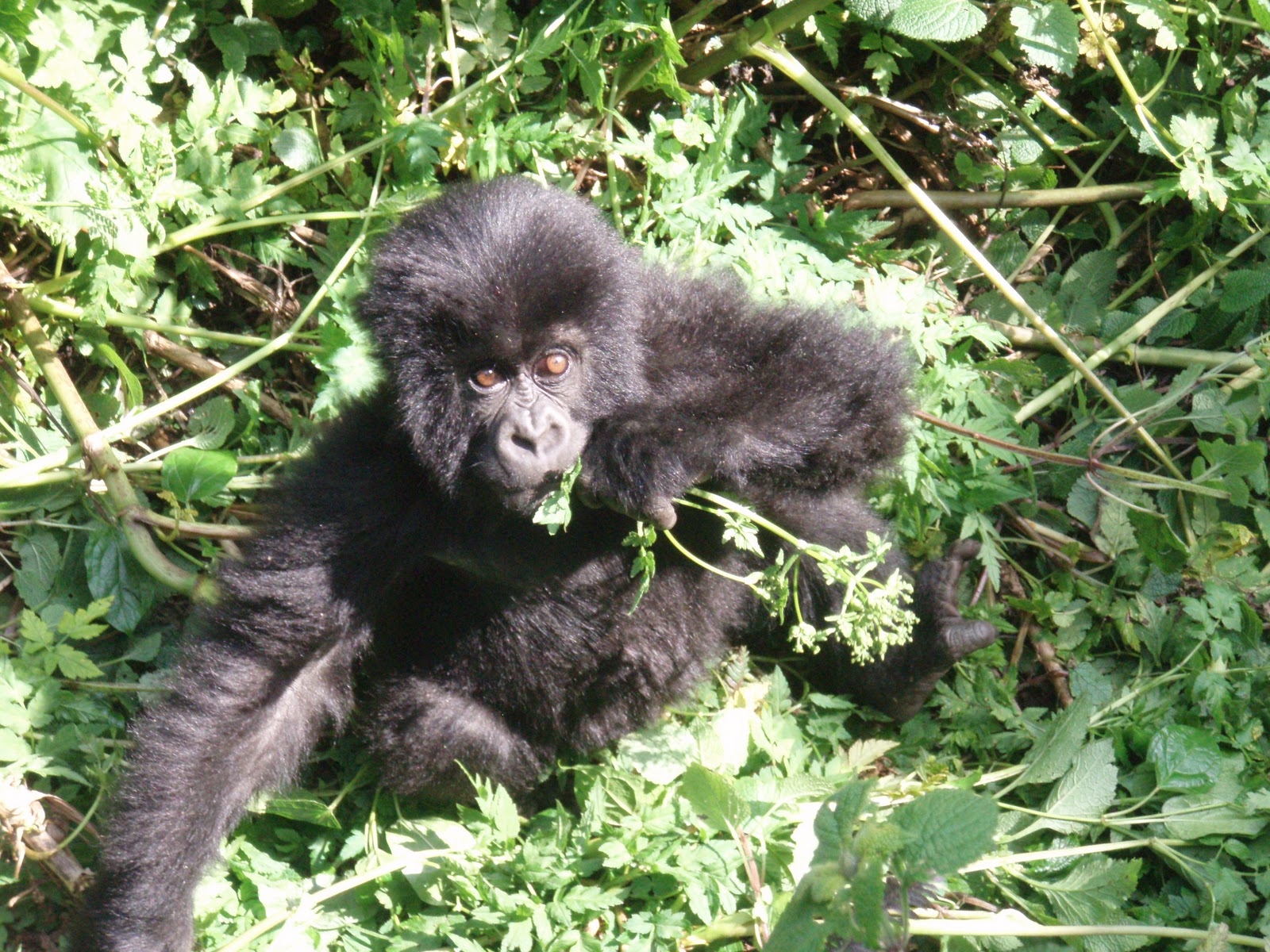
1. Hiking to see the Mountain Gorillas in Rwanda's Virunga National Park:
2. The Cheetah Conservation Fund, Namibia:
http://www.cheetah.org/.
The Conservation rescues cheetahs that otherwise might die or be killed. Some of the cheetahs are used to being around people and will never be reintroduced into the wild, while others are exposed only minimally to humans with hopes that they can be re-released into national parks in the future. While we were there (in May 2009), we were able to see the cheetahs exercise and to get in on the feeding process (chunks of horse meat are thrown out of the back of a pick-up truck; cheetahs come and grab the meat and then head into the bush to eat it.)
3. Etosha National Park, Namibia; (and while we're "in Namibia," another amazing spot for landscape/animal viewing: Sossusvlei sand dunes in the Namib Desert.) Etosha is a self-drive park, which contributes to the thrill of making discoveries. While in Etosha, we headed out on a night safari and stayed up through the night to watch a lit watering hole. We visited Etosha & Sossusvlei in February and May of 2009.
4. Diving with the Great White Sharks in Gansbaai (near Cape Town), South Africa
I went in the cage in April 2009. When we returned for the second visit in June 2010, I declared myself "the photographer" and stayed warm and dry on board the boat.
5. The Serengeti National Park, Tanzania and Kenya, especially for the annual Wildebeest Migration & Ngorongoro Crater, Tanzania:
http://www.sunsafaris.com/serengeti-migration-route.html
(I'll have to post pictures from Serengeti and Ngorongoro at a later date, since I don't have access to them right now. I had the good fortune to get to see the very beginnings of the great wildebeest migration (I was there in May 2007), when the wildebeests were starting to gather, blocking the roads and filling up the savanna as far as the eye can see. I can only imagine how impressive the migration is when it gets into full swing in the late summer months.)
Honorable Mention: Akagera National Park, Rwanda. Because this was my first safari experience (in November 2006), it will always be near and dear to my heart. It's also remarkable because you are can rent your own SUV and you're pretty much free to drive anywhere in the park, with or without a guide, you can camp within the park (at your own risk), and you generally feel like you have the whole place to yourself. Sadly, the park lost many of its animals during the 1994 Genocide, and shortly thereafter, when the Rwandan government was forced to give part of the park land to returning war refugees due to land shortages. Still, we have had incredible times there, and try to make it back to support the park annually.
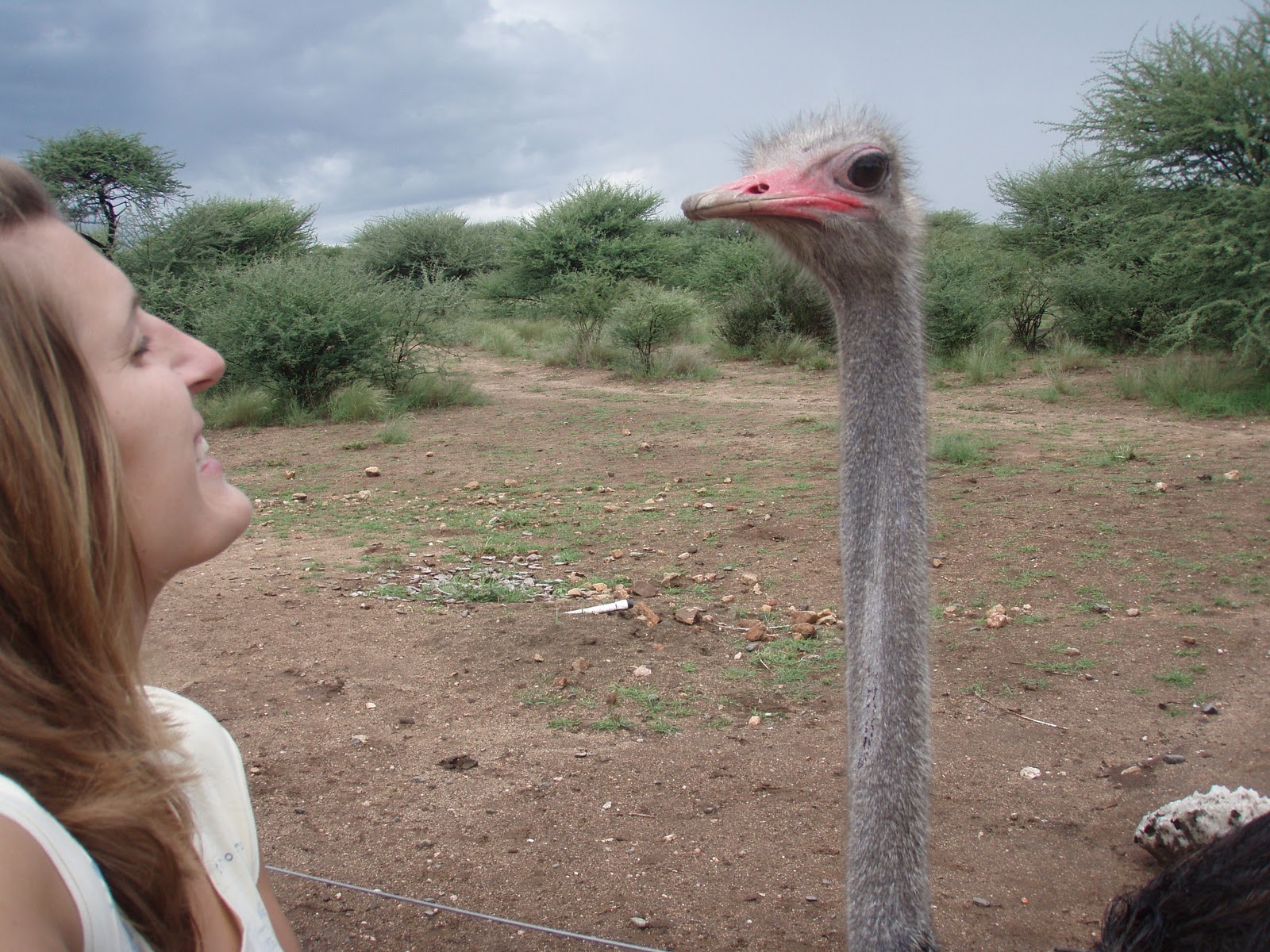
Though not an incredible destination in and of itself, there is an Ostrich Farm near Okahandja, Namibia (on the road to Swakopmund.) It allows you the rare chance to get up close and personal with ostriches, birds which tend to be on the elusive side within the national parks.
Also worth mentioning is the tiny Kragga Kamma Game Park (
http://www.kraggakamma.com) and the much larger Addo Elephant Park, both located near Port Elizabeth, South Africa.